
From the moment your child is born, they become a statistic.
Within minutes, their head circumference is measured, along with their weight and height. From then on, every well-baby visit tracks their progress on a graph, comparing them not only to where they were at birth, but to where they stand against their peers. They are expected to follow a given trajectory.
Soon after come the developmental milestones.
Their first smile. Their first laugh. Making eye contact. Babbling. Responding to sounds. Rolling over. Sitting up. Crawling. Walking. First words.
Measured the Moment They Are Born

With my first child, I remember these milestones being discussed endlessly among fellow mothers. As parents, we naturally compare notes about what is probably the most important thing in our lives — our child or our children. In many ways, it is comforting. Reassuring, even.
But comparison almost always carries a quiet undercurrent of anxiety.
If your child is ahead, wonderful. If they "lag behind" in the slightest, however, it can feel mildly catastrophic — especially with your first child. And then, of course, there are the parents who simply cannot resist bragging.
I remember my mother once telling me about a woman she knew who proudly announced at any given opportunity that all of her children were fully potty trained by 12 months old. My mother quickly realized, as she put it, "she was not my people." Not because potty training is unimportant, but because she could not understand turning it into a competition.
She was also deeply skeptical that any child was genuinely potty trained at 12 months old. Her theory was that the child likely spent much of the day sitting on the potty, and it merely appeared as though she was potty trained. Her general view was that by adolescence we would, hopefully, all end up toilet trained eventually, so perhaps everyone could relax a little.
The Comparison Trap
Looking back now, I realize how early the pressure begins.
At well-baby visits, parents compare sleep schedules, first words, feeding habits, milestones, and development. I remember anxiously wondering whether my bilingual household was somehow delaying my children's speech. My mother constantly reassured me that children develop differently and that comparison was dangerous.
Still, it was hard not to compare.
One of my daughter's friends spoke in elaborate, almost adult-like sentences by kindergarten. I vividly remember wondering whether I had somehow failed my children intellectually by allowing too much age-appropriate television instead of exposing them to more sophisticated vocabulary earlier on. My children were allowed to watch Pingu — the penguin that babbles in incomprehensible language (which, I promise, is not in fact Swiss German, as one person once asked me). Maybe they should have been watching the news just for the vocabulary.

When you have a child with any type of learning difference, those comparisons can become even more painful.
While your child struggles through beginner reading books, another child appears to be casually reading War and Peace in first grade while simultaneously becoming fluent in Mandarin and the violin.
My oldest daughter, who later turned out to have dyslexia, struggled with small print but thrived when words were presented on large flashcards. I remember feeling incredibly proud when she became one of the first children in her class to master her key words — she had worked so hard for it — until another little girl arrived carrying a Harry Potter book.
Whether it was first or second grade hardly matters now. What I remember most is the quiet hysteria it triggered among the fellow parents when they saw that their daughters' peers were reading chapter books.
At the time we were in the UK school system, where academic competition starts remarkably early. What I did not expect was that leaving it would not end the comparisons. I will say it did eliminate a lot of pressure in the early academic years — Americans, it seems, put the hysteria on hold until university looms. At least when it comes to academics.
Sports, on the other hand... nothing quite prepared me for that.
Welcome to Gym A
As I found out soon enough, the comparisons and statistics simply evolved.
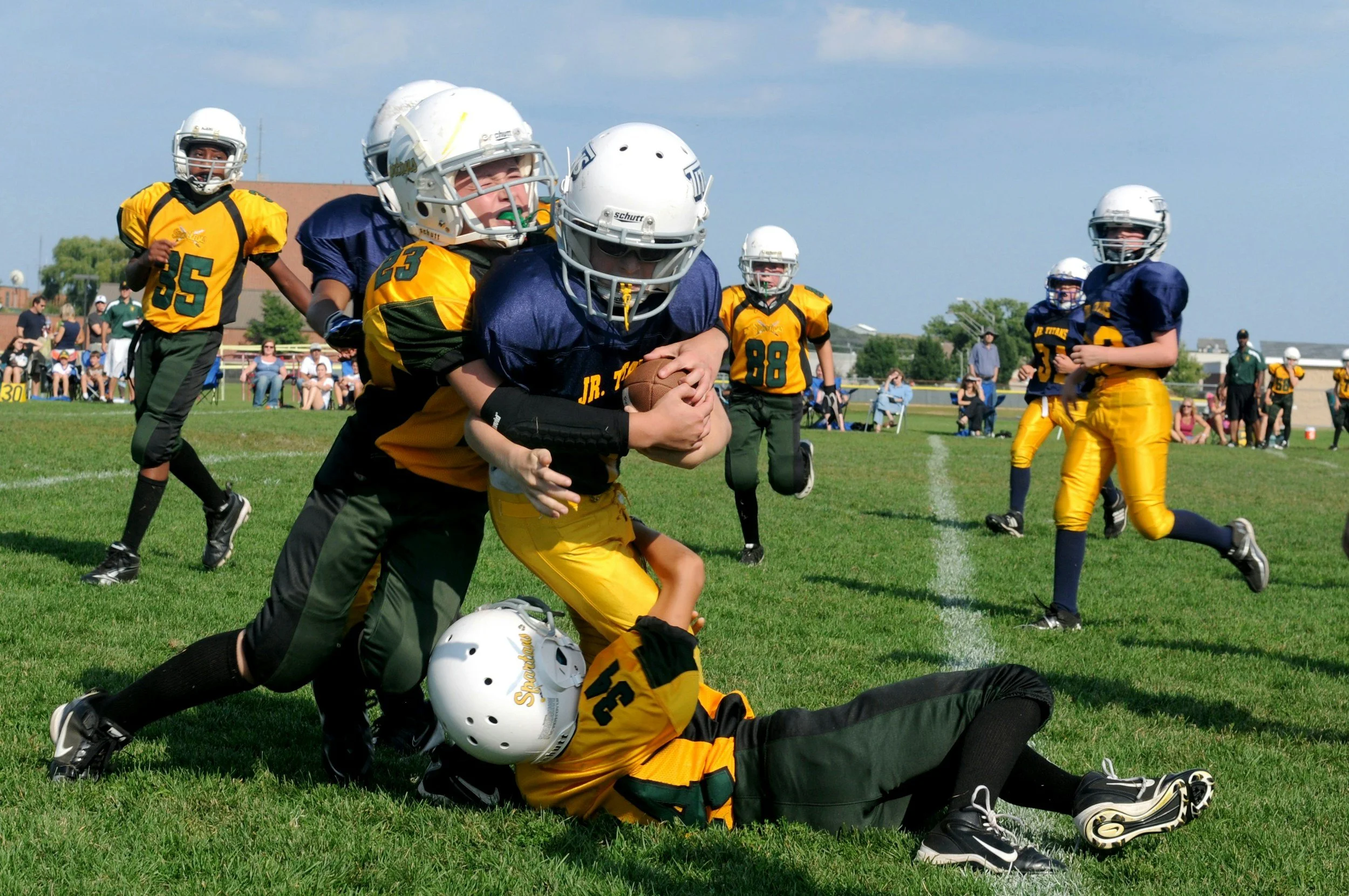
While MAP scores, SATs, ACTs, AP classes, university rankings, and acceptance rates are all familiar forms of comparison, the obsession surrounding children's sports was something entirely new to me. In America, children now appear to specialize in sports at approximately the same age they are still struggling to tie their shoes.
Soon after we moved to America, my daughters were excited to join a new gymnastics class. One of my daughters was scouted early on. Little did I know what I had agreed to when she was invited to join the exclusive and slightly fabled "Gym A," leaving behind the perfectly ordinary "Gym B" where the majority of aspiring gymnasts trained.
Everyone had heard of the mythical Gym A. Very few had actually been invited. It carried the mysterious aura of an Ivy League society crossed with a small religious sect.
She left her sister behind and went from attending one cheerful weekly practice to suddenly participating in four- to five-times-a-week, three-hour training sessions of intense gymnastics. My other daughter, who apparently also showed promising ability, had been deemed simply too old — at the grand old age of eight. Thankfully, we were told, we had not left it too late for our seven-year-old to still make it to the amazing and exclusive Gym A.
Now, as a European, let me tell you: we like our vacations (holidays). Visit almost anywhere in Europe in July or August and you will find that people — even working parents — actually take time off. I was of course very concerned about how I would remain in touch with my roots and travel back home on occasion if my daughter committed her life to this newfound endeavor. Graciously, they informed me that we were fortunate to belong to a gym generous enough to allow gymnasts a couple of cumulative weeks of holiday per year. As a European who considers five weeks of holiday the bare minimum required for civilized functioning — and whose family still lives abroad — this arrangement was never going to sit comfortably with me.

Thankfully, after a few months at Gym A, my daughter announced she had absolutely no desire to continue "specializing" in gymnastics and wanted to pursue other interests. I quietly celebrated.
This did, however, temporarily introduce me to the fascinating world of "gymnastics mums."
To be fair, many were lovely and were simply following their child's interests. But there were also the others — the ones we have all heard about — screaming through giant glass windows for their child to point their toes and telling them to force a smile while performing multiple backflips. They would openly scold their daughter through the glass and complain if she did not perform as expected.
They also possessed an astonishing level of technical knowledge involving flips, rotations, levels, scores, and statistics. I often felt as though I had accidentally wandered into an Olympic selection committee meeting.
Even for boys, I found, it could be a challenge. My son once asked for a playdate with a boy from his first-grade class. Approaching the mother felt less like organizing a child's social life and more like attempting to secure a meeting with a Fortune 500 CEO. The child's schedule was apparently booked solid with travel soccer, baseball clinics, and what I can only assume was a very demanding investment banking internship. I gave up, and my son found other friends to have playdates with — ones with slightly more availability.
I genuinely admire the amount of time, money, and dedication many American parents pour into their children's sports. With college tuition costs now resembling the GDP of small nations, I understand why scholarships loom large in many parents' minds.
But I also think sports have become yet another statistic by which we measure our children.
Is your child on the A team, B team, or — heaven forbid — the C team? Are they a starter? Have they fully committed to one sport by age eight? Have they already been identified as a future Division I athlete before losing their second baby tooth?
For those of us mere mortals whose children do not want to be shipped endlessly from tournament to tournament, are not naturally athletic, or simply enjoy multiple sports — for the fun of it, or their health — the whole thing can feel faintly absurd.
Somewhere along the way, the ideas of camaraderie, fun, exercise, and simply being part of a team seem to have become secondary to optimization.
What No Graph Can Measure
For parents of children with learning disabilities or neurodivergence, these statistics can feel especially relentless. Every graph, percentile, and standardized measure becomes another reminder of how your child compares to the "national average" — where they "should" be, according to an invisible committee somewhere.
Sometimes your child shines.
Other times, the numbers suggest they are falling behind where they are "supposed" to be.
Raising both neurotypical and neurodivergent children, I have seen how differently school can treat them. Neurodivergent children, in particular, are not always given the chance to shine in a traditional school setting.
My son attends a school that truly understands educational differences — he has learning differences of his own, several of them, in fact. While the school still monitors developmental progress, one of the things I admire most is how hard they work not to reduce children to numbers alone. They genuinely try to see the child behind the statistics.
And so much of what makes children extraordinary cannot be quantified.

My son, despite all his educational challenges, has the confidence to dress completely differently from his peers. While many boys his age wear sports jerseys as the unofficial school uniform, he might show up dressed head-to-toe in turquoise with intentionally mismatched yellow and orange socks, a leather jacket, and sunglasses because he has decided he looks like a rock star that day.
His dream, incidentally, is to become one. Specifically, a member of Green Day. Fine by me. My husband — who still harbors unresolved rock star ambitions of his own — is more than happy to live vicariously through our son, which, now that I think about it, may not be entirely different from the travel soccer parents.
My son can also make almost anyone laugh. He instinctively brings together children from different social groups because he believes they would like one another. He has been doing this for as long as I can remember. He possesses a social confidence and emotional openness that many adults never fully develop.

No graph will ever measure that.
While statistics absolutely have their place in medicine, education, and child development, I sometimes wonder whether we have started valuing only the things that can be easily measured by societal standards.
What about humor? Originality? Creativity? Empathy? Resilience? Emotional courage? The confidence to be unapologetically different?
Or, in my son's case, exceptional style and an ability to charm almost anyone he meets.
Perhaps the most important things about our children are the very things no graph can capture.
And maybe that is the real epiphany.
If this post resonated with you, I highly recommend The Element by Ken Robinson, or at the very least his famous TED Talk. Worth your time if you're up against a world that keeps trying to reduce your child to a number.
Published Sept 1, 2026