
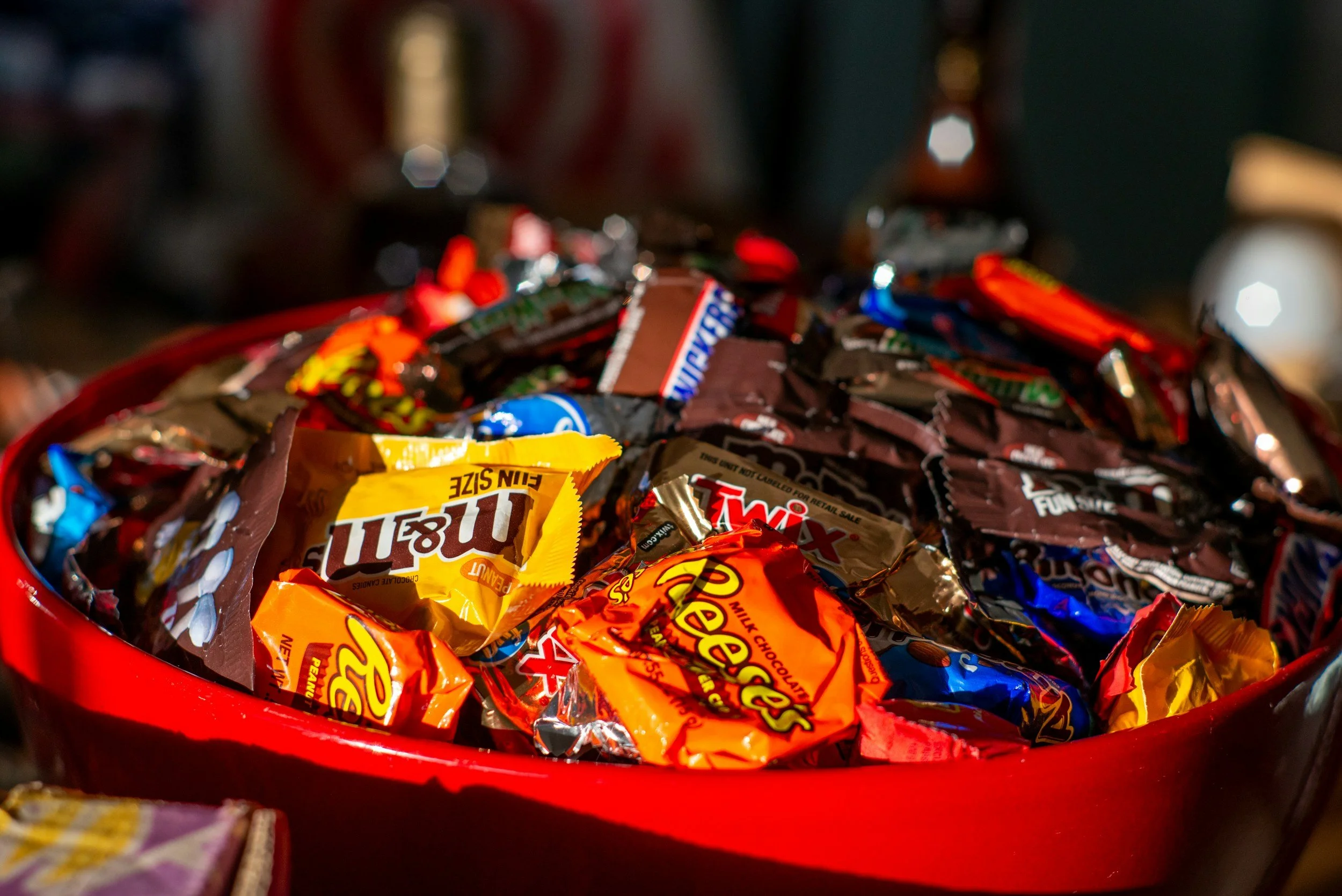
When I arrived in America, I was taken aback by how many artificial colors and preservatives were in American candy — think blue Airheads, possibly up there with the worst offenders in my European mind. And for full transparency: I am not against giving my kids treats. What I could not believe was how much of it, in every color of a chemistry set, was handed out freely — at birthdays, back-to-school events, school picnics, homecoming, the artificial something-or-other at school on Fridays. Where was my moment to give my kids a treat? I felt I had been recast as the villain, forever saying no to my kids, while they were handed a year's worth of candy in the shortest possible window.
And trust me, I love sweets. As a good Swiss, chocolate sits at the very top of my hierarchy of everything. Hand me any dessert menu and I will find the chocolatiest of the chocolates, and no — sharing is mostly out of the question. Get your own. Haribo, I'll have you know, is in fact a German company, and living right across the border I had my fair share of gummy bears growing up (although I'd strongly argue the cola bottles are better). So this is not a post by someone who disapproves of candy. This is a post by someone who takes candy very seriously.
The Shock of Halloween
As an enthusiastically imported new arrival, I loved adopting my newfound country's celebrations — 4th of July, Thanksgiving (my favorite), and of course Halloween. Nobody does Halloween quite like Americans. I naturally assumed it must be an American invention; I looked it up, and it turns out the roots are Celtic, carried over by Irish immigrants — but the modern version, the full-scale candy operation, is unmistakably an American perfection.

Now, the idea of sending our children out to take sweets from total strangers is slightly unnerving, especially given that we spend the rest of the year telling them not to trust strangers. But that argument is quickly set aside: I am the adult bystander accompanying this adventure, and I will sift out anything open or dodgy.
What I could not set aside was the color. People — what is with the bright blue??? I can think of nothing in nature that is this bright, and certainly nothing that would cause my child's tongue to remain that shade for the rest of the night after a single blue Airhead. I genuinely considered scrubbing my son’s tongue with soap. It was so blue I worried about a permanent imprint.
And it made me wonder: why is this necessary? Why does a sweet need a color that exists nowhere on earth naturally — a straight-up combination of chemicals, ingested for decoration?
Two Versions of the Same
What many Americans genuinely don't know is that, in Europe, foods containing certain artificial dyes must carry a warning label — stating that they "may have an adverse effect on activity and attention in children." No manufacturer wants that sentence on a bag of sweets, so most European candy makers simply reformulated. The result: for many internationally famous candies, there exist two versions — one for America, with the brighter colors and the chemical dyes, and one for much of the rest of the world, colored with plant-based extracts — still visually appealing I might add.
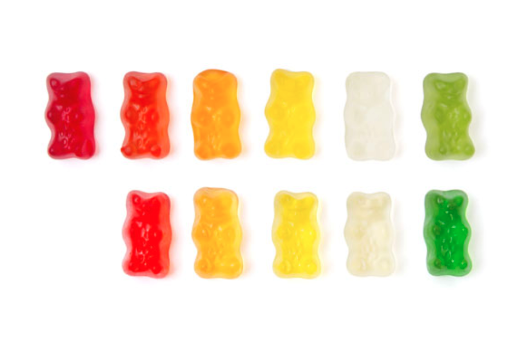
European vs. American gummy bears — which is which?
Take Swedish Fish. The ones sold here contain Red 40 — and are made in Hamilton, Ontario. The Swedish version is colored with plant extracts. Or take the gummy bear: yes, the same German company happily makes an artificially colored version specifically for the American market — colors it would never dream of selling at home, where the bag would have to carry a warning label. Not ideal when your customers are children.
I once ran the now semi-famous side-by-side comparison — the American gummy bears next to the European ones — for a room full of American adults. The response was astoundingly telling: they had no idea. Not that they had decided the dyes were fine, but that they had simply never been told there was another version.
The Great Halloween Trade
So there I was after our first American Halloween: my four children sitting proudly around the kitchen table over their piles, each one neatly organized by candy type, surveying treasures they had only recently discovered existed. They were, quite literally, in Candyland.
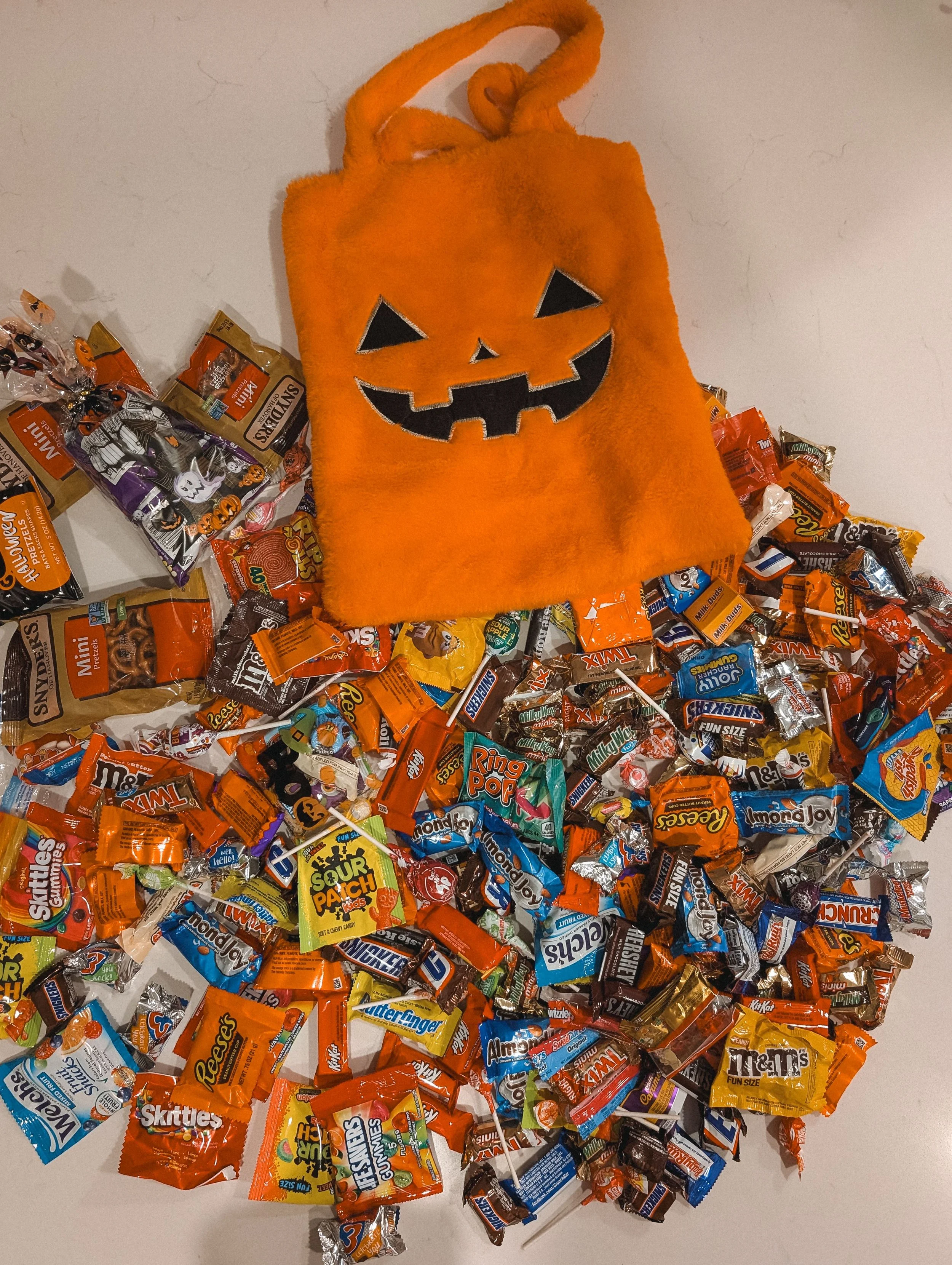
I reacted like any level-headed European who finds herself utterly perplexed, helpless, and outnumbered — with, I'll admit, a huge pang of guilt and doubt: what if I was wrong and 330 million Americans were right?
No way!
So we made a deal. That night they could each eat a little from the pile — one Airhead, a few of the less horrendous offenders. And the next day, the trading floor opened: for every brightly dyed sweet they surrendered, they received a replacement I had raced out to buy — naturally colored versions of the same treats. For the serious offenders I went to 3:1 — one bright blue Airhead (sorry Airhead, you are the target, but really, you should know and do better!) and gave them three replacements. I traded and traded until I was left holding a humungous bag of chemically colored rubbish, which secretly disappeared. And I learned my lesson for good: the next time we visited Switzerland, I packed half a suitcase with candy that was mummy-approved — proof to my kids that I was never against treats. I was against this version of treats.
America Catches Up
When I started my one-woman candy trading floor, I did not expect that, years later, America would begin having the argument I had already been having in my own kitchen.
Red No. 3 was revoked outright in January 2025, with a reformulation deadline of January 2027. Three months later, a different administration asked manufacturers to voluntarily drop the six remaining synthetic dyes, explicitly noting that companies already use natural ingredients elsewhere. Some brands have reformulated. Others have made promises of varying enthusiasm. And some of the largest — including companies that have sold the dye-free version abroad for years — have committed to nothing at all. Which is the detail I find most telling… they have had the recipe all along.
It was never a question of how. It was a question of whether anyone here would ask.
As my husband always says when I wonder “why” about pretty much anything: Natasha, follow the money trail. I will leave it at that.
Eating With Our Eyes
So I keep coming back to my original question: Do Americans eat more with their eyes than Europeans? Maybe. Here, the colored candies seem to be shouting from the rooftops while in Europe they just sit on a shelf, waiting to be chosen.
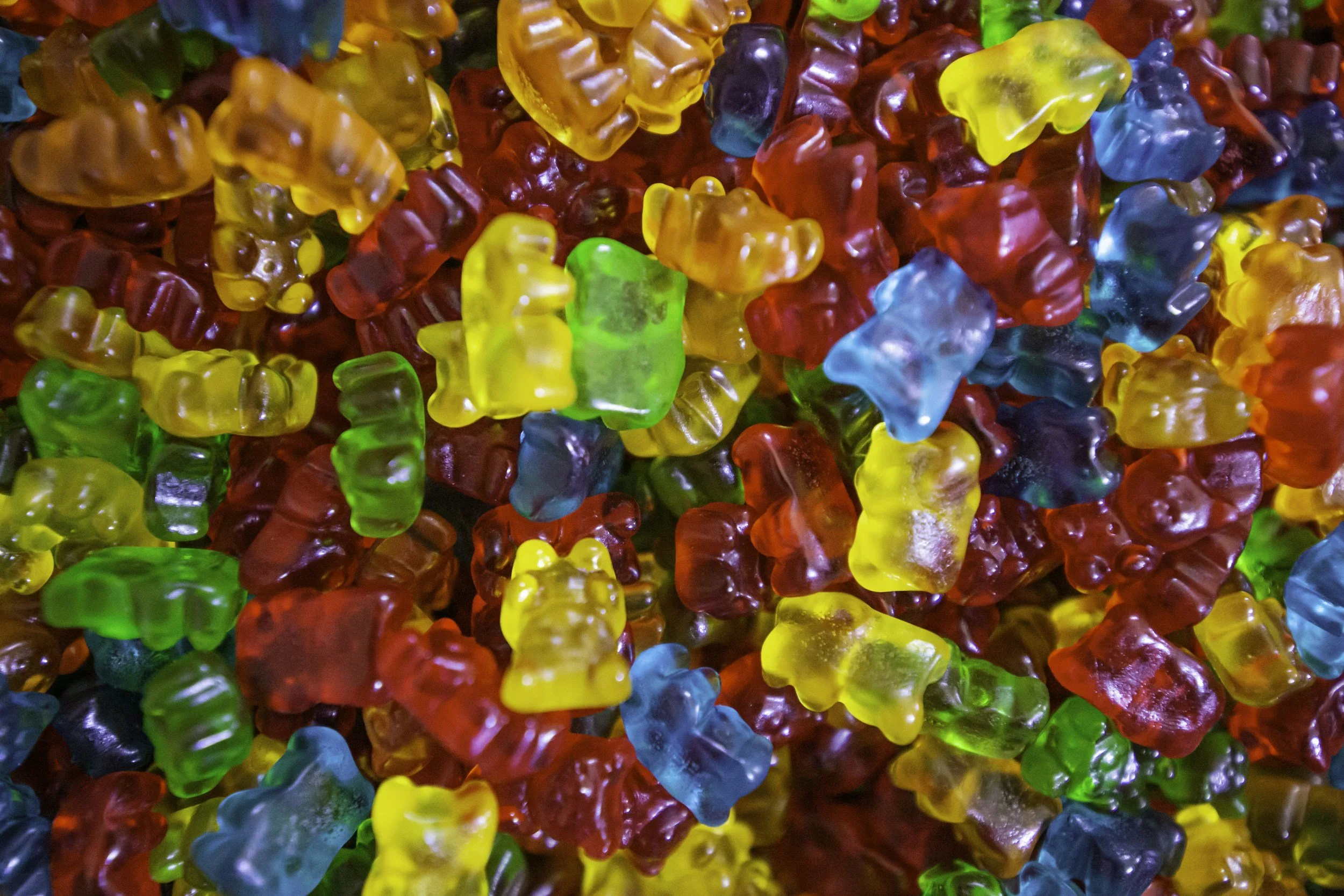
But this is what I know for certain: where I come from, there is no blue gummy bear. I had never met one until I arrived. And nobody — not one child, in one of the most candy-devoted countries on earth — ever missed it.
Do we really need blue gummy bears to be happy? I can report from the other side: No! My kids and I are very happy without them, thank you very much.
Published Oct 1, 2026